
Editorial team
Titanium Measuring Tools: Straight Rulers vs Rolling Rings
Titanium measuring tools come in different forms, from straight rulers and folding tools to rings that roll along a surface. Choose the method around the shape you need to measure and the units you use. A compact object can be convenient to carry, but its format should make the measurement easier to understand and repeat.
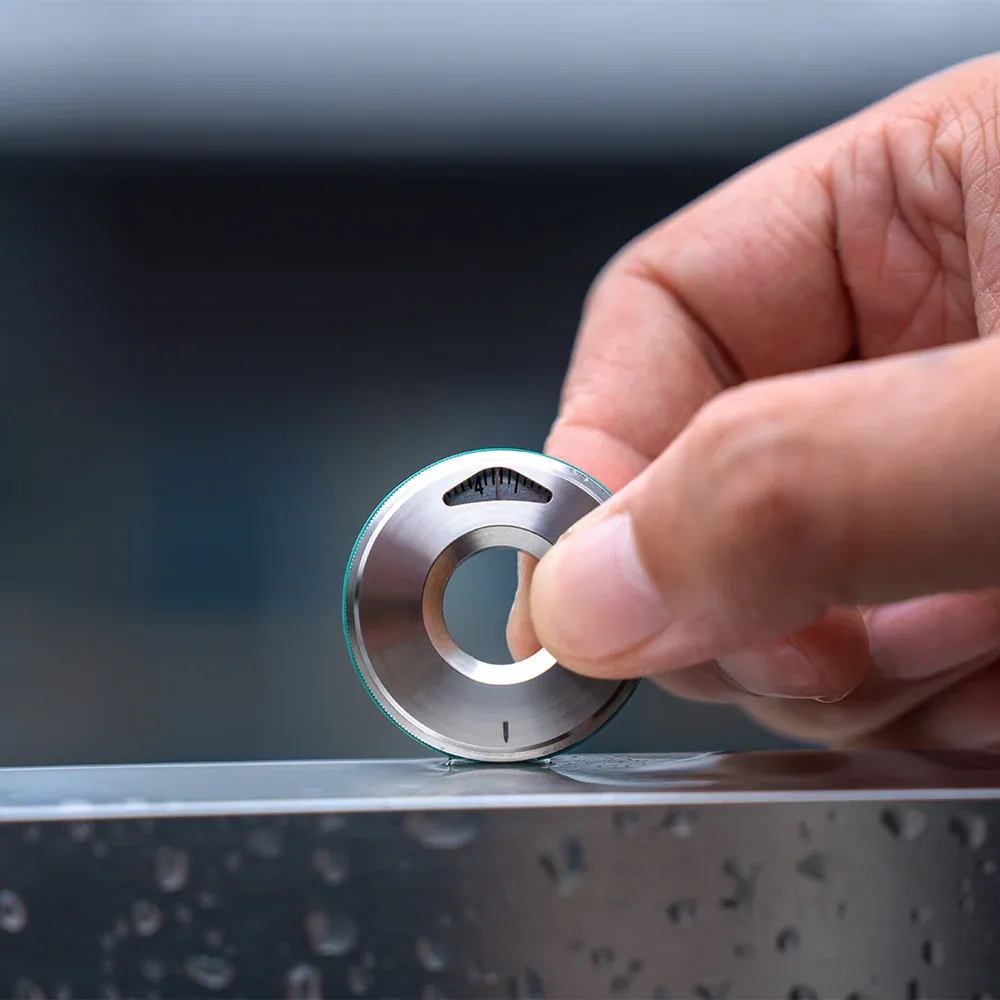
Titanium measuring tools come in different forms, from straight rulers and folding tools to rings that roll along a surface. Choose the method around the shape you need to measure and the units you use. A compact object can be convenient to carry, but its format should make the measurement easier to understand and repeat.
Match the tool to the shape
A straight ruler gives a visible reference along a straight edge. A rolling tool follows a path and converts its movement into distance. TITANER's Tiroler guide describes the latter approach for curves and irregular outlines. The two methods involve different handling, so a rolling ring should not be treated as a universal replacement for every ruler.
For drawings, small parts or craft work, think about where the measurement begins and ends. Consider whether you need a straight edge for marking as well as a length reading. A separate function can be valuable when it supports your normal workflow rather than adding another operation to remember.
Confirm the units and version
The collected Tiroler 2.0 listing offers 10cm and 5-inch configurations. Make sure the chosen unit system is the one you want to use and that the instructions correspond to that version. A photograph showing several finishes or sizes does not mean all of them are included in the quoted option.
TITANER's original rolling-ring explanation describes combining complete revolutions with the remaining scale reading. Follow the current manual for the selected model, including its starting reference and reading method. Keep that explanation with the tool if it is a gift, especially when the recipient is unfamiliar with this style of measurement.
Check repeatability in your own use
Before relying on a reading, compare the tool against a known reference in the way the manufacturer intends it to be used. Pay attention to the surface, starting position and alignment. Small handling differences can matter when a tool is rolled rather than held against a fixed edge.
Ask the supplier for any stated tolerance or calibration information needed for your work. An attractive machined object or a precise-looking scale does not by itself establish a measurement standard. Keep casual workshop and craft uses separate from tasks that require documented accuracy.
Consider the rest of the design
Grip, scale contrast, storage and the ability to read the markings all affect convenience. TITANER's Mix 3.0 article shows another approach, combining measurement and stationery functions in one object. Compare that layout with a simpler tool rather than assuming more features always improve the experience.
For an enquiry, identify the surfaces, preferred units, required range and any accuracy documentation. Then choose the finish and presentation. A useful measuring gift makes its method clear and fits the recipient's work, instead of asking them to change a familiar routine solely to accommodate a novel shape.
Conversation
Sign in to join the conversation.